
Technologies
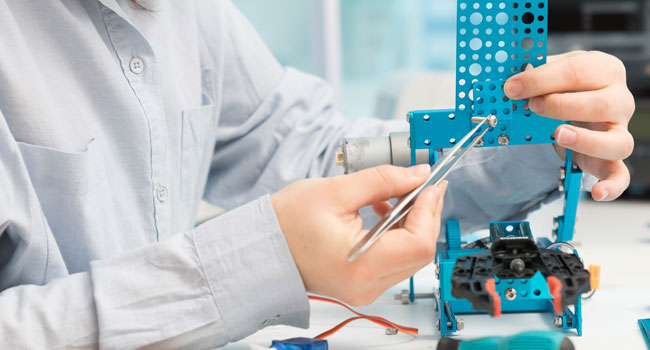
The technologies used at Inductron reflect the latest state of the art. Efficiency, reliability, and quality—along with environmental protection and sustainability—are essential criteria for our processes.
In addition to the procedures that have long proven themselves in practice, we also expertly implement new and customer-specific technologies. To provide customized solutions, we have, among other things, our own in-house capabilities for tooling and manual manufacturing, as standardized machine production is not always possible.
We see ourselves as a solution partner for your specific needs—and this is, of course, reflected in our technologies as well.

High-Voltage Technology
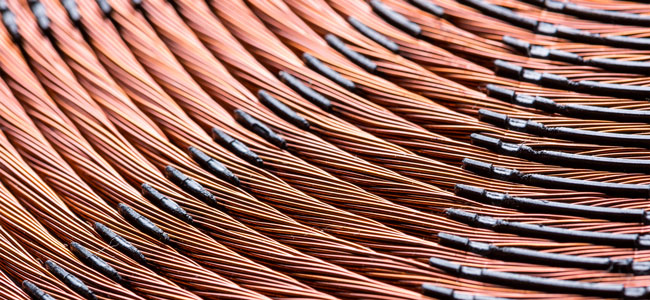
Safety and reliability are the most important quality standards for our products. This is especially true in the field of high-voltage technology, where errors can have serious consequences. With our high-voltage test systems, which are specifically designed to meet national and international standards, we are able to perform various test procedures properly and professionally.
These include, for example, electrical insulation capability and electrical insulation strength. This makes it possible to reliably determine the clearances and creepage distances on the surfaces of inductive components. In addition, partial discharge testing is performed in accordance with the relevant international standards, as well as the safe electrical isolation of the respective components required by the guidelines.
Precision and quality are non-negotiable, especially in the field of high-voltage inductive technology. The safety and reliability of these components are the reasons our customers choose Inductron and our products.
Our proven technologies have consistently demonstrated their quality under a variety of conditions. Customer satisfaction in this area speaks for itself.
potting
Under certain operating conditions, electrical components are exposed to high humidity or corrosive environments. Corrosion, in particular, is a major source of failure. There are various methods for reliably protecting inductive components from corrosion and other harmful environmental influences over the long term.
The process known as “potting” has proven particularly effective in this regard. Transformers, coils, and chokes can be reliably protected from undesirable environmental effects through potting or vacuum impregnation. But that’s not all: Careful potting of inductive components can also improve other properties.
These include, among other things, temperature resistance, electrical insulation, and heat dissipation. Last but not least, when properly potted, the components also benefit from increased mechanical strength. Vibrations and direct mechanical stress on the sensitive inductive components are significantly reduced, which enhances the durability and reliability of the entire system.
Our tried-and-true potting processes are carried out directly at the production site and are therefore subject to our own strict quality standards.

CAD Systems
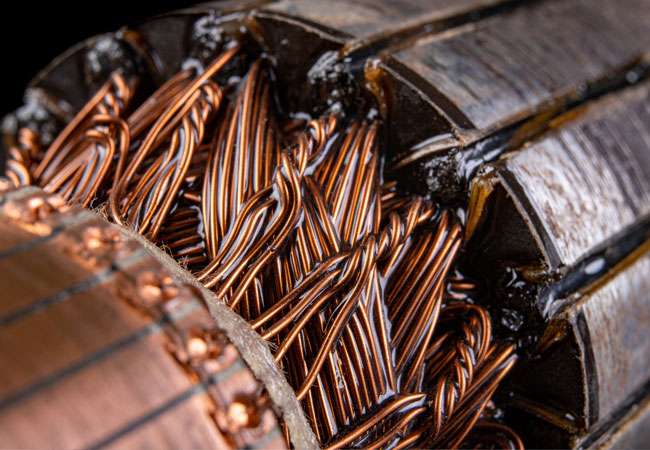
Nowadays, modern CAD systems are indispensable in the development and manufacturing of high-quality components. At Inductron, we have long relied on incorporating computer-aided design (CAD) as early as possible in the process. The use of high-quality CAD systems pays off, especially when developing new inductive components.
Many development steps can already be planned on the computer, and their impact on the final product or the manufacturing process can be analyzed in great detail. This, of course, requires CAD software that is precisely tailored to our customers’ specific requirements.
For our customers, this means significant cost savings right from the first stage of development, because potential sources of error are identified much more quickly, and costly failures are not discovered only once production has begun.
Toolmaking
To be able to implement customer-specific requests and requirements promptly and cost-effectively, we have established our own tooling department. This is the only way we can offer solutions for inductive components and systems for which ready-made tools do not yet exist.
Since we can offer everything from a single source, there are no potential inefficiencies or communication problems that can arise when working with external tooling companies. In addition, we can respond particularly quickly to changing requirements and always offer our customers a customized and cost-effective solution.
As a result, our customers not only receive a perfect final product, but also the ability to install it immediately in the desired location. Thanks to our in-house tooling department, we are also able to produce one-of-a-kind items and implement complex designs to our customers’ complete satisfaction.
Manual Manufacturing
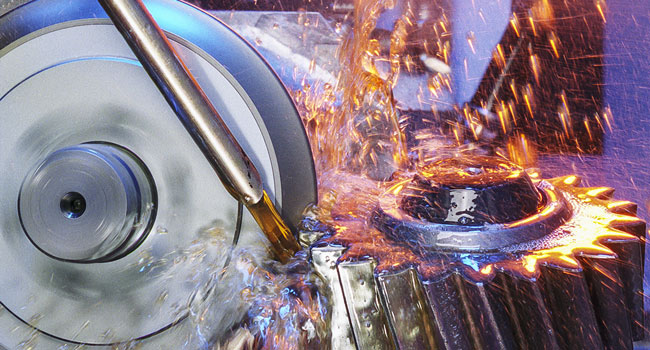
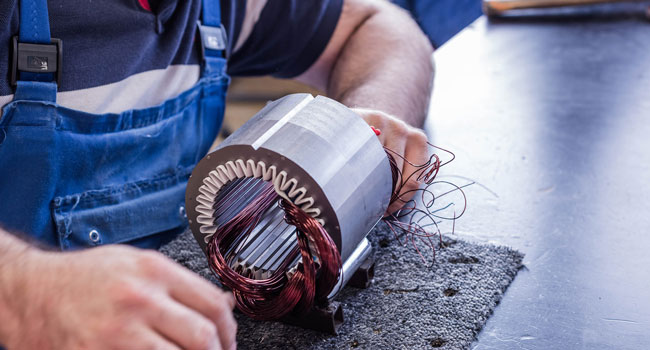
Although modern manufacturing technology and automation have made immense strides in industry, there are still situations in which machine-based manufacturing reaches its limits.
This may be due, for example, to special customer requirements or specific product configurations. In these cases, time-tested manual work is often the best and most cost-effective solution—and sometimes it is even the only way to carry out a project.
That is why we offer our customers manual manufacturing when needed. We rely on semi-automatic manufacturing techniques as much as possible, provided this is feasible and/or desired.
Because we want to respond flexibly to our customers’ needs, manual production is and will remain an important part of our service portfolio. Just contact us—we’ll provide you with customized solutions.
Custom Technologies
In few other fields are there as many customer-specific technologies to consider as in inductive components. For example, many designs include additional passive circuit components that must be integrated into the desired components.
Our ability to integrate such customer-specific technologies into our inductive components in a timely and cost-effective manner often enables our customers to achieve a significantly more compact, self-contained design. That is why it is particularly important to us to integrate these technologies into our products.
The result is an optimal product that perfectly meets the customer’s individual requirements and delivers the desired performance. Of course, we apply the same testing and manufacturing standards to custom technologies as we do to our standard components.